The Going Concern Assumption

The going concern concept is extremely important to generally accepted accounting principles. Without the going concern assumption, companies wouldn’t have the ability to prepay or accrue expenses. If we didn’t assume companies would keep operating, why would be prepay or accrue anything?

  • Retention of old customers and expansion through recent customer acquisition would help make the business profitable and aids toward the volume growth of the product.
  • To ensure reliability, auditors often use sensitivity analyses, stress-testing financial models to evaluate how adverse scenarios might affect viability.
  • However, the auditors are not predicting the future or guarantee the company’s ability to operate as going concern.
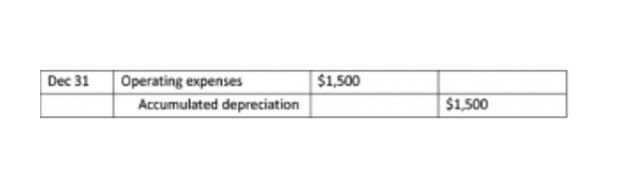
  • The entire concept of depreciating and amortizing assets is based on the idea that businesses will continue to operate well into the future.

A. Depreciation of Fixed Assets

Retention of old customers and expansion through recent customer acquisition would help make the business profitable and aids toward the volume growth of the product. The product should be reasonably priced and innovative to beat its peers and contradebt retain value for the customers. The prime aspect of a business remains the capability and integrity of the management.

The standard requires the Financial Statements to properly disclose the basis of preparation of Financial Statements. Going concern is a term that refers to a company’s ability to make enough money to stay afloat or to avoid bankruptcy. If a business is not a going concern, it means it’s gone bankrupt and its assets were liquidated.

Importance of the Going Concern Concept

If and when an entity’s liquidation becomes imminent, financial statements are prepared under the liquidation basis of accounting (Financial Accounting Standards Board, 20141). An adverse opinion states that the financial statements do not present fairly (or give a true and fair view). This opinion will be expressed regardless of whether or not the financial statements include disclosure of managerial accounting vs financial accounting the inappropriateness of management’s use of the going concern basis of accounting. The auditor’s role is to assess whether a company’s assessment of being a going concern is accurate.

They do this by reviewing the company’s financial statements and evaluating the factors that may impact its ability to continue operations. Your primary responsibility is to obtain sufficient appropriate audit evidence about the appropriateness of management’s use of the going concern basis of accounting in the preparation of the financial statements. The going concern assumption shapes how financial statements are prepared and presented, influencing financial metrics and disclosures. When a company is considered a going concern, assets and liabilities are valued to reflect their long-term utility.

It’s given when an auditor has no concerns about the financial statements of a business or its ability to operate in the future. It is the responsibility of the business owner or leadership team to determine whether the business is able to continue in the foreseeable future. If it’s determined that the business is stable, financial statements are prepared using the going concern basis of accounting. The going concern concept is a key assumption under generally accepted accounting principles, or GAAP. It can determine how financial statements are prepared, influence the stock price of a publicly traded company and affect whether a business can be approved for a loan.

  • The going concern assumption – i.e. the company will remain in existence indefinitely – comes with broad implications on corporate valuation, as one might reasonably expect.
  • Employees may perceive instability, leading to higher turnover or recruitment challenges.
  • Explore the concept of going concern in accounting and its implications for financial statements, investors, and auditors.
  • The going concern concept ensures consistency and long-term perspective in financial statements, providing stakeholders with a stable view of the business’s financial position.
  • However, when the result of management assessment ongoing concern shows that the entity has no going concern problem, and auditors’ reviews also conclude the same thing while the actual is different.

Example

A negative judgment may also result in the breach of bank loan covenants or lead a debt rating firm to lower the rating on the company’s debt, making the cost of existing debt increase and/or preventing the company from obtaining additional debt financing. They can help business review their internal risk management along with other internal controls. An auditor’s responsibilities include obtaining sufficient appropriate audit evidence about the appropriateness of management’s use of the going concern basis of accounting. They must conclude whether there is a material uncertainty about the entity’s ability to continue as a going concern.

E. Financial Reporting Without Liquidation

A financial auditor is hired by a business to evaluate whether its assessment of going concern is accurate. After conducting a thorough review (audit) of the business’s financials, the auditor will provide a report with their assessment. At the end of the day, awareness of the risks that place the company’s future into doubt must be shared in financial reports with an objective explanation of management’s evaluation of the severity of the circumstances surrounding the company. However, when the result of management assessment ongoing concern shows that the entity has no going concern problem, and auditors’ reviews also conclude the same thing while the actual is different.

This involves evaluating factors such as cash flow projections, debt obligations, and market conditions to identify uncertainties that may cast doubt on the entity’s viability. The going concern concept is a vital principle that underpins financial reporting, ensuring that businesses are evaluated based on their ongoing operations rather than immediate liquidation. By assuming continuity, it provides stability and clarity to financial statements, fostering stakeholder confidence and supporting long-term planning. While challenges to the going concern assumption can arise during periods of financial distress or uncertainty, adhering to this principle ensures that businesses maintain transparency and accountability. Ultimately, the going concern concept is not just an accounting assumption—it is a reflection of the enduring potential and resilience of organizations in the face of changing circumstances.

For instance, inventory is valued at cost or net realizable value, whichever is lower, assuming it will be sold in the normal course of business. This ensures assets are not overstated, offering a realistic view of financial health. The auditor will consider the adequacy of the disclosures made in the financial statements by management. The Material Uncertainty Related to Going Concern section will follow the Basis for Opinion paragraph and will cross-reference to the relevant disclosure in the financial statements. It will also state that the auditor’s opinion is not modified in respect of this matter.

Businesses rely on the going concern assumption to plan for investments, resource allocation, and growth strategies over extended periods. Under the going concern concept, the machinery is depreciated over its useful life, reflecting its contribution to ongoing operations rather than its liquidation value. The business is expected to meet its liabilities as they fall due over time, assuming normal operations continue. The going concern concept accounting reveals the true financial integrity of an organization. It is an action an organization conducts to ensure a clearer picture of their financial and growth related concerns. Another instance where there might not be constant top-line and bottom-line growth, and increased margin is when the demand for the product is ‘cyclical’ in nature.

This plan can include selling assets to pay off debts, obtaining contributions to equity, reducing expenses, or obtaining additional financing. Continuation of an entity as a going concern is presumed as the basis for financial reporting unless and until the entity’s liquidation becomes imminent. Preparation of financial statements under this presumption is commonly referred to as the units of production method going concern basis of accounting.

What is the Going Concern Concept?

The auditor’s responsibility is not to determine whether the company can prepare its financial statements using the going concern basis of accounting, but to obtain sufficient audit evidence about the appropriateness of management’s use of this basis. If auditors identify uncertainties that cast doubt on a company’s viability, they must include an emphasis-of-matter paragraph in their report to highlight risks for stakeholders. Severe uncertainties, coupled with inadequate management plans, may lead auditors to issue a qualified or adverse opinion, potentially eroding stakeholder confidence and attracting regulatory scrutiny.

Remember, it’s essential to use a combination of procedures to generate sufficient appropriate audit evidence, rather than relying on a single procedure like discussion with management or obtaining a written representation. In severe cases, unresolved going concern issues can lead to insolvency or bankruptcy. Companies may need to restructure, sell assets, or liquidate, affecting shareholders and causing broader economic repercussions, such as job losses. Industries like airlines or energy, which are highly leveraged, are particularly vulnerable during economic downturns. Proactively addressing going concern risks through robust planning and transparent communication can help businesses mitigate these consequences and improve recovery prospects. In the AA exam candidates may be required to describe the audit procedures that the auditor should perform in assessing whether or not a company is a going concern.

Similarly ISA 580, Written Representations recognises that while written representations do provide necessary audit evidence, they do not provide sufficient appropriate audit evidence on their own about any of the matters with which they deal. If there are any material uncertainties relating to the going concern assumption, then management must make adequate going concern disclosures in the financial statements. If there’s significant evidence that a privately held business might not be viable under the going concern assumption, the auditor must disclose it in the audit report. Even if the business’s financials aren’t audited, an accountant who has concerns about the business’s viability should disclose those concerns to the business owner.

Key Principles of the Going Concern Concept

If so, the auditor must draw attention to the uncertainty regarding the entity’s ability to continue as a going concern, in their auditor’s report. Separate standards and guidance have been issued by the Auditing Practices Board to address the work of auditors in relation to going concern. As mentioned earlier, it is not the auditor’s responsibility to determine whether, or not, an entity can prepare its financial statements using the going concern basis of accounting; this is the responsibility of management. The going concern concept is one of the most fundamental principles in accounting, shaping how financial statements are prepared and interpreted. It assumes that a business will continue its operations for the foreseeable future, allowing it to meet its obligations, fulfill its objectives, and maintain its assets without the need for liquidation.


Cost of Goods Manufactured COGM Formula, Calculation

cost of goods manufactured calculator

For instance, if ABC Manufacturers produced 5,000 products last month but only finished 1,500 of them, their starting WIP inventory for the following month would be 1,500 products. They contribute to your COGM because the business must spend money to finish producing those goods. Like with most other financial computations, the calculation must be applied to a certain cost of goods manufactured calculator time period. Depending on the type of organization you’re accounting for, this might change. The sum of all manufacturing costs is known as the total cost of goods manufactured, or COGM.

cost of goods manufactured calculator

Significance of Calculating Cost of Goods Manufactured (COGM)?

  • Gross margin, a key performance indicator, assesses the efficiency of production and sales processes by indicating the percentage of revenue that exceeds the cost of goods sold (COGS).
  • COGM is used in the income statement of the reporting and is subtracted from sales to then calculate gross margin (the portion of a company’s revenue after direct costs have been removed).
  • In practice, most modern manufacturers use MRP software with perpetual inventory systems that calculate WIP automatically and continuously.
  • Total Manufacturing Cost (TMC) calculations only consider direct material prices and exclude indirect materials and manufacturing overhead costs.
  • Evaluate each stage in the production process regularly to identify and eliminate obstructions, unnecessary steps, or redundant tasks.
  • Investing in leadership development ensures that your managers and team leaders are equipped to handle various aspects of the manufacturing process.
  • Cost of goods manufactured is the total cost incurred by a manufacturing company to manufacture products during a particular period.

This includes the wages, salaries, and benefits of those employees who work directly on the production line or in the workshop. At each step, a different production cost adds up, giving you a complete picture in the form of COGM. But it’s a step-by-step process, and you need practical actions to reach precise COGM confidently. Incorporating a reliable BOM management tool like LevaData into your procurement strategy streamlines operations while positioning your team to make impactful contributions to the company’s overall success. Building close relationships with reliable suppliers is key to mitigating this risk.

Step 2: Calculate direct labor costs

Now, let’s learn about a step-by-step guide that would help you to calculate the cost of goods manufactured (COGM). The following equation can be used to calculate the cost of goods manufactured (COGM) metric by combining the aforementioned data. Please review the formula below that determines a company’s end-of-period work in progress (WIP) balance once we go on to the COGM formula. Every aspect of their firm must be fully understood by any ambitious business owner.

Step 3: Calculate Manufacturing Overhead

cost of goods manufactured calculator

Review production processes, reduce waste, negotiate better rates with suppliers, and leverage automation tools like ERP software. Manufacturing overheads represent indirect costs that are necessary to support production, but they can bookkeeping be tricky to track. When calculating the cost of goods manufactured (COGM), you’ll have to consider many factors that raise production costs. Once you accurately calculate the cost of goods manufactured (COGM), you can make informed decisions about pricing, budgeting, and overall financial planning. Unlocking sustained profitability in a manufacturing business takes time and effort.

cost of goods manufactured calculator

COGS to COGM Linking

A detailed BOM breakdown provides great benefits when negotiating with suppliers. This detailed knowledge can help secure lower prices for parts, control spending, and build valuable relationships with suppliers, leading to long-term BOM cost savings. Deskera Books enables you to manage your accounts and finances more effectively. Maintain sound accounting practices by automating accounting operations such as billing, invoicing, and payment processing. The total cost of those three expenses, or the cost of manufacturing, is $40 million. It is important to take into account both the starting and end balances, much like with raw material and work in process inventories.

  • And as a result, the cost of goods made (COGM) is an important figure, particularly for manufacturing firms.
  • The total cost of those three expenses, or the cost of manufacturing, is $40 million.
  • If BOM costs are underestimated, the final product price may be set too low to cover expenses, squeezing profit margins or even leading to losses.
  • The cost of goods manufactured (COGM) is calculated by taking into account each of these areas.
  • Calculating COGM accurately is essential for cost control, pricing strategies, and financial reporting.

Gather Data on Each Component

cost of goods manufactured calculator

This is the cost value of the raw materials inventory at the start of the accounting period. By following this calculation, you can determine the total cost incurred to manufacture goods during a specified period and gain valuable insights into your production expenses. Another closely related KPI crucial in manufacturing accounting is the cost of goods sold or COGS.

  • A high COGM suggests high manufacturing costs, which may imply ineffectiveness in the production process.
  • The COGM schedule is a part of the financial statement of a business that shows the total cost incurred by a company to manufacture goods during a specific period, typically a month or a year.
  • By implementing these tips, you can ensure that your COGM calculations are accurate, efficient, and reflective of your actual manufacturing costs, leading to better financial management and decision-making.
  • With this information, they can modify their business plans and think of ways to increase revenues.

It reflects the expenses accumulated during the manufacturing process, regardless of whether the goods are sold or not. The cost of goods manufactured is https://www.bookstime.com/ an important KPI to track for several reasons. Cost of Goods Manufactured (COGM) is a detailed calculation of everything it takes to produce goods. It gives a complete breakdown of the production costs by including raw materials, labor, and other expenses tied directly to manufacturing. The COGM calculation is rooted in industrial and managerial accounting practices, evolving as manufacturing processes became more complex. It provides a comprehensive view of production costs, crucial for pricing, budgeting, and financial analysis.

What Does A Grant Accountant Do: Duties And Responsibilities

That just cannot be the case and as the article itself says the tax treatment does not dictate accountancy treatments. I won’t comment further on this because your “method” just is not right. Grant management, which some funders call a management plan, first and foremost includes all the administrative responsibilities you must complete during the time frame of the https://quickbooks-payroll.org/ grant. Under IFRS, Company can elect a policy to recognize the grant of the land (a nonmonetary asset) at its fair value of $100,000. Deferred income is recorded for the same amount and subsequently recognized in profit or loss systematically as the facility is depreciated. Alternatively, Company can recognize the land and the grant at their nominal value (zero).

Grant Accounting

In addition to this, the allocation of such deferred income is made over the periods and in proportions in which depreciation on related assets is charged. In addition to this, there are cases where a government grant is given in order to provide financial support to the enterprise rather than as an incentive to cover certain expenditure. Senior accountant analysts typically earn similar educational levels compared to grant accountants. Specifically, they’re 2.8% less likely to graduate with a Master’s Degree, and 0.3% less likely to earn a Doctoral Degree. In general, accountant/consultants achieve lower levels of education than grant accountants. They’re 6.0% less likely to obtain a Master’s Degree while being 0.4% less likely to earn a Doctoral Degree.

Amendments under consideration by the IASB

Some nonprofits may attempt to use multiple spreadsheets to show all the money going in and out of the fund, what the money is being used for, and when it is being spent. While it is possible to do this in an elaborate spreadsheet system, it is highly inefficient and time-consuming. As you start your grant program, you may be able to manage the process with notebooks, spreadsheets, and file folders. You will find that you spend more time on paperwork and filing than on developing a grant program that supports your mission. This will affect your ability to focus on the strategic goals of your organization’s grant efforts.

  • Your organization could receive a grant that is required to be used over a long period of time, such as a few years.
  • Further, in case the non-monetary assets are given free of cost, then such assets are recorded at a nominal value.
  • ITCs are usually government incentive schemes delivered through the tax system – e.g. in the form of an income tax liability reduction or increase of tax-deductible expenses.
  • Your reply hits the nail on the head where you say that for Capital Allowances you deduct the grant from the cost of the asset.
  • Such grants are given as a part of the total investment in an enterprise.
  • The accountants improve accounting practices and prepare financial statements at the end of every year.
  • The application process takes hard work, and there is often a lot of competition.

These donor restrictions will be explained in the gift instrument, or award letter, that accompanies the grant and specifies how the funds must be used. The application process takes hard work, and there is often a lot of competition. There are many resources regarding the grant application process but very few on how to account for and track a grant after you receive it. If your nonprofit organization receives a grant, you will need to demonstrate accountability for how that money is spent, which means you will need to use fund accounting to track those dollars. If your organization depends on grants, grant accounting should be on your radar. It can help you track grant-related revenue and expenses so that you fulfill your mission and maintain excellent relationships with donors, stakeholders, and others who are important to you.

isCompleteProfile ? “Setup your profile before Sign In” : “Profile”

In the particular case of grant income I am clearly in a minority of one. When we received our first grant it seemed to me that capital was being put into the company from outside and I treated it as such. As you cannot claim capital allowances on the grant it is in effect being taxed. For  tax computational purposes you adjust the profit but Ayeesha is absolutely correct that the receipt of the grant reaches reserves by way of the P & L Account in tranches equivalent to depreciation. Once you and the funder have finalized the contract, you can now announce the work.

  • Senior accountant analysts earn the best pay in the finance industry, where they command an average salary of $89,199.
  • Either way, it’s an opportunity to once again promote your organization’s mission, vision, and strategic goals.
  • For  tax computational purposes you adjust the profit but Ayeesha is absolutely correct that the receipt of the grant reaches reserves by way of the P & L Account in tranches equivalent to depreciation.
  • But accountant/consultants earn the highest pay in the finance industry, with an average salary of $68,479.

Later on in your career, you could end up with the title regional controller. Further, these cash flow movements are shown separately irrespective of whether or not the grant is deducted from the related asset for the purpose of balance sheet presentation. Under this method, the government grant is shown as a deduction from the gross value of the asset concerned in order to arrive at its book value. SSAP 4 recognises that the tax treatment of different types of grant can be polarised.

Asset Related Grants Presentation

Grant recipients must document their actions to ensure proper accountability. Error corrections initiated beyond 60 days or after the project end date are continually an area of audit scrutiny, also requests that appear to use a remaining balance near or beyond the project end date may be questioned. Losses or disallowed costs on other sponsored projects are not allowable cost transfers, please see cost transfer policy. It is preferred that a positive, proactive approach to managing sponsored funding be taken by Principal Investigators and supporting administrative personnel.

  • The deferred income approach is used when government grants pertain to depreciable assets.
  • When you receive a grant from a governmental agency, it will typically include a program budget.
  • The nonprofit would also have to show that they used the money for the intended purpose during the specified period of time.
  • While the size of your organization will dictate the size of the grant management staff, remember that people, not administrative tasks, are at the core of your success.

IAS 20 Accounting for Government Grants and Disclosure of Government Assistance outlines how to account for government grants and other assistance. SSAP 4 requires any revenue based grants to be recognised in the profit and loss account in the same period as the expenditure to which the grant relates. In addition, the standard also recognises that sometimes grants may be received by clients to finance general activities Grant Accounting over a specified period, or to compensate for loss of income. Many accountants may well consider that if a grant is taxable on receipt, the entire grant should be credited to the profit and loss account on receipt (i.e. accounting treatment to follow the tax treatment). SSAP 4 does not take this view; instead SSAP 4 recognises that the tax treatment of a grant cannot determine the accounting treatment of the grant.

What Is Negative Balance on a Credit Card and What To Do?

Shareholders’ equity, which is listed on a company’s balance sheet, is used by investors to determine the financial health of a company. Shareholders’ equity represents the amount that would be returned to shareholders if all a company’s assets were liquidated and all its debts repaid. In this article, we’ll review how shareholders’ equity measures a company’s net worth and some reasons behind negative shareholders’ equity.

How is a negative balance shown?

All of your purchases, cash advances and balance transfers make up your statement balance. This may also include any refunds or statement credits. Anytime money is credited back to your account in this way, it will show up with a minus symbol in front of the dollar amount.

You might incorrectly assume that a withdrawal won’t be processed for a few days and that a deposit will clear in the meantime. “Negative float” refers to the difference between checks written against—or deposited in—in a checking account and those checks that have cleared (according to bank records). Explore the world and earn premium rewards with Chase Sapphire Reserve® or Chase Sapphire Preferred®. Compare travel credit cards and find your ideal travel companion. Once this condition is met, the report generates a row showing the details related to the transaction.

How a negative balance affects your credit score and credit limit

If you’re in a pinch for money, that negative credit balance may come in handy. To expedite the process of getting your cash, you can call the credit card company’s customer service team using the phone number on the back of your card and request a refund. Some credit card companies will offer several refund options, including a check or even a direct deposit into your bank account. But negative balances are amounts that the card issuer owes to the cardholder—usually a positive thing for a consumer.

How to Show a Negative Balance

Negative balances can be shown within a check register, spreadsheet or an account book a few different ways. And even if you don’t ask for a refund, your credit card company must try to issue a refund if you don’t make any other purchases for more than six months. If a credit card fee is charged to your account and waived, for whatever reason, it could possibly result in a negative balance. If you have a significant negative balance and don’t have a need to transfer it to another card, you may want to ask to receive the negative balance in cash. Often, banks will give you the cash amount through either direct deposit or they’ll mail you a physical check for the amount they owe you.

What is a negative credit card balance?

Financial statements often offer one of the best benchmarks for your records. The A/R team should reconcile payments as soon as they are received and record any discrepancies. Correctly allocate all payments to the proper account, and apply refunds or credits against open invoices. If your team identifies an overpayment, determine if it can be reconciled with another invoice or refunded to the customer. Negative account balances can occur for several reasons, but regardless of the cause, a balance below zero isn’t a bad thing.

For example, if you owed $100 but accidentally mailed in a $150 check, you would have a -$50 balance on your next statement. You can take steps to prevent your bank account from going in the red. At 18 he ran away and saw the world with a backpack and a credit card, discovering that the true value of any point or mile is the experience it facilitates. He remains most at home on a tractor, but has learned that opportunity is where he finds it and discomfort is more interesting than complacency.

Reasons why you might have a negative credit card balance

If you use a bank account to receive deposits from your WooPayments accounts, your bank account may be debited to cover the negative balance. If your bank account does not qualify to be debited, recovering from a negative balance will behave as described below in the debit card case. 3 Individual Savings Claims – We calculated each customer’s interest savings based on payments Tally made on their behalf to their credit cards with a higher APR than their Tally line of credit. We compared the total daily interest that would have accrued with and without Tally based on the difference between their credit card APR and the APR for their Tally line of credit.

  • If you use a debit card to receive deposits, your card will not be debited.
  • Just keep using the card that has a negative balance and the purchases you make on the card will eventually bring you back zero or a positive balance.
  • Your financial data is critical to your organization, so you must ensure it’s secure.
  • But since we generally make money when you find an offer you like and get, we try to show you offers we think are a good match for you.
  • Shareholders’ equity represents the amount that would be returned to shareholders if all a company’s assets were liquidated and all its debts repaid.
  • But in order to receive the refund, you’ll need to have a current address or phone number on your account.

If you’re aware that your account is negative and you try to make a payment from that account knowing it won’t go through, you could be charged with a crime in some circumstances. If you decide you want to close your bank account while it’s negative, the bank could refuse and ask you to pay the balance first. You could forget about a payment you previously scheduled or a purchase you made earlier in the month.

Keep Track of Your Debit Card Purchases

A minus sign will appear before the number of your current balance, such as -$200. Your accountant might record a payment as a write-off if they believe the customer will not be able to pay off the debt. If you later receive payment, it can lead to an account with a negative balance.

  • For example, if an asset account has a credit balance, rather than its normal debit balance, then it is said to have a negative balance.
  • Or you might deposit a check and then make a payment right away, before the funds are available in your account.
  • If you choose to, you can simply use your credit card for transactions and the negative balance will be automatically applied to the charges.
  • Not only do you not have to make a payment, but you could have some money coming to you.

Perhaps you bought an item with a credit card and then did the wise thing by paying off the balance quickly. However, you soon learned the product you purchased wasn’t what you needed or was broken, so you returned it. Since you already paid off the balance, that refund will create a negative statement balance after it is processed to your credit card.

Negative Credit Card Balance: Main Points

You may simply lose track of how much money is in an account and think you have a higher available balance than you actually do. Or you might deposit a check and then make a payment right How to Show a Negative Balance away, before the funds are available in your account. Checks that have been written may take several days to clear if they are mailed or if the payee delays in depositing the check.

What is a negative balance report?

The Negative Balance Report provides a history of claims retracted/re-adjudicated that create a negative balance (refund due to Harvard Pilgrim), as well as any claims that are used to offset/recoup any or all of that negative balance. It will also reflect any refund checks applied to that negative balance.

Credit card companies are not out to keep hard-earned cash you don’t owe them. If you end up with a negative balance on your credit card, you can kick back and wait for the credit card company to handle it. Though the credit card company has your extra cash, it won’t hang on to it and refuse to give it back. One way or another, you will get this cash back — either in the form of a refund payment from the credit card company or by simply using your credit card to zero out the balance. The method by which you receive the money is generally up to you. So, you got your credit card statement in the mail and ripped it open, expecting either a $0 balance or that you owe money.

Online Bookkeeping Services San Jose, CA

bookkeeping services san jose

Originally founded in 2005 with only general accounting and tax services available, Ami Shah CPA has expanded to serve the San Jose area and all 50 states. NSKT Global serves small businesses and large enterprises in San Jose. It bookkeeping offers accounting services to clients across various industries, including automobile, real estate, and healthcare. Its CPAs also create financial reports that include income statements, balance sheets, and cash inflows and outflows. In addition, they handle outsourcing services for documents like vouchers, invoices, and bills through secure platforms.

Financial Transaction Entry

bookkeeping services san jose

Other services include tax preparation, planning, and problem-solving. Based in San Jose, Shannon & Snyder, CPAs is a full-service commercial property tax appeal specialist and accounting firm founded in 1994. Al Sanchez Bookkeeping & Income Tax Services is a company that caters to the San Jose metro and nearby areas. It serves a diverse clientele, including students, homeowners, renters, businesses, and corporations. It offers bookkeeping services and helps file necessary business licenses, maintain accounting records, and create a profit-and-loss assessment for the fiscal year.

bookkeeping services san jose

Bookkeeping and tax preparations in San Jose, California

A variety of customizable packages are available, including weekly or bi-weekly scheduling options. The agency’s owner, Ruby, utilizes her knowledge of business tax law in categorizing books and maximizing clients’ deductions. With more than a decade of experience, she also handles the tax preparation needs of individuals and businesses. AC Tax is a company that offers solutions to clients in the San Jose metro. Its bookkeeping services include bank and credit card reconciliation, accounts receivables and payables preparation, profit and loss sheet reports, aging and vendor reports, and secure data exchange. It also handles income tax preparation, tax consultation, and IRS tax problem resolution for individuals and assists businesses in addressing corporation tax and payroll issues.

bookkeeping services san jose

Silicon Valley Tax Coach

  • We love helping fellow small businesses in San Jose thrive, and we’re excited to do the same for you.
  • From bookkeeping and payroll services to financial reporting and business insights, BooXkeeping is your all-in-one solution to make managing business finances easy.
  • There are some times that we’ll request documents from you (like account statements or receipts), just to ensure the information we have is correct.
  • 1-800Accountant San Jose offers financial services to individuals, nonprofits, and small businesses in the metro.

Serving San Jose and the neighboring communities, the company offers comprehensive accounting and bookkeeping services to help clients minimize their overall expenses and increase their profitability. NomersBiz has over 25 years of accounting, taxation, and bookkeeping experience. Crown Bookkeeping & Payroll Services, Inc. is an accounting firm located in Redwood City with well over 28 years of experience. The business works with both small and large businesses to manage bookkeeping and payroll.

  • AC Tax is a company that offers solutions to clients in the San Jose metro.
  • Call Better Bookkeepers located in San Jose now to see how we can help you get your business finances in order.
  • Not sure where to start or which accounting service fits your needs?
  • Founded in 1975, Redwitz, Inc. is a Certified Public Accountant firm that serves clients worldwide with locations in the San Francisco Bay area, Orange County, and San Jose.

Learn how to build, read, and use financial statements for your business so you can make more informed decisions. Running a small business is hard enough without the added stress of bookkeeping. Whether you need someone to take over your monthly reconciliations, handle payroll, or clean up your QuickBooks file, we’re here to make your life easier. We love helping fellow small businesses in San Jose thrive, and we’re excited to do the same for you. By Outsourcing your bookkeeping needs, you can save money and give yourself more time to concentrate on your customers while feeling secure about your finances. San Jose, California’s original state capital, has many things to do.

Crown Bookkeeping & Payroll Services, Inc.

We take care of all of your bookkeeping needs so you don’t have to, leaving you free to focus on the rest of your life. Whether you are starting a business or just need help, we are here for you. With Complete Controller you get the support you need, when you need it, at a price you can afford.

bookkeeping services san jose

It’s this personalized approach that sets us apart and has kept clients coming back year after year. We support and work with most major accounting and bookkeeping software platforms, making it easy to outsource to us and keeping you in control of your financial data. There are some times that we’ll request documents from you (like account statements or receipts), just to ensure the information we have is correct. If you need to share files with your bookkeeping team, it’s as simple as uploading a file. Join over 35,000 US-based business owners who have streamlined their finances and have grown their businesses with Bench.

  • If there’s any change in your bookkeeping team, we’ll let you know as soon as possible and make sure the transition is a smooth one.
  • With more than 50 years combined experience our goal is to have you, the business owner, obtain the knowledge you need to grow your business and avoid some of the problems that can cause setbacks.
  • Book a demo today to see what running your business is like with Bench.
  • By Outsourcing your bookkeeping needs, you can save money and give yourself more time to concentrate on your customers while feeling secure about your finances.
  • With Bench, you get a team of real, expert bookkeepers in addition to software.
  • Between managing your employees and worrying about producing sales, bookkeeping can fall by the wayside.

Compare our Top Accountants

Alam One Stop Tax and Accounting Services is an enrolled agent firm serving individuals and businesses in San Jose. It offers a variety of bookkeeping services san jose bookkeeping solutions to track weekly or monthly transactions. Its services include data entry, invoicing and bill paying, bank and credit card reconciliation, internal accounting reports, and tax reports. Additionally, it has estate planning and investment management services. The firm is headed by Mahbub Alam, a certified public accountant who is proficient in Quick Books Pro, Excel, and Solomon III and IV. First Tax Service, Inc, is a San Jose-based accounting firm that offers bookkeeping solutions to individuals, small businesses, and entrepreneurs throughout California’s South Bay and Silicon Valley.

All You Need to Know About Dividends in Arrears: Impact on Shareholders

how to calculate dividends in arrears

In year 4, preferred stockholders must receive $220,000 ($145,000 in arrears and $75,000 for year 4) before common shareholders receive anything. Since only $175,000 is declared, preferred stockholders receive it all and are still “owed” $45,000 at the end of year 4. In year 3, preferred stockholders must receive $205,000 ($130,000 in arrears and $75,000 for year 3) before common shareholders receive anything. Since only $60,000 is declared, preferred stockholders receive it all and are still “owed” $145,000 at the end of year 3. However, it is possible that the dividend declared is not enough to pay the entire amount per preferred share that is guaranteed before common stockholders receive dividends. In that case the amount declared is divided by the number of preferred shares.

Preferred Dividend Calculator

In year five, preferred stockholders must receive $75,000 before common shareholders receive anything. Since $200,000 is declared, preferred stockholders receive $75,000 of it and common shareholders receive the remaining $125,000. In year 2, preferred stockholders must receive $150,000 ($75,000 for year 1 and $75,000 for year 2) before common shareholders receive anything. Since only $20,000 is declared, preferred stockholders receive it all and are still “owed” $130,000 at the end of year 2. Arrearage also applies to dividends that are due but have not been paid to preferred shareholders.

What is your current financial priority?

Finally, calculate total dividends in arrears by multiplying the quarterly expected dividend payment by the number of missed payments. This is the amount that must be paid out before common stockholders are issued dividends. But dividend payments are not guaranteed to owners of common stock.

Common Shares Vs. Preferred Shares

In year three, the economy booms, allowing the company to resume dividends. The cumulative preferred stock shareholders must be paid the $900 in arrears in addition to the current dividend of $600. Once all cumulative shareholders receive the $1,500 due per share, the company may consider paying dividends how to calculate dividends in arrears to other classes of shareholders. Preferred dividends hold significance as they represent consistent income payments to preferred shareholders, establishing an attractive incentive for investors. This predictability enhances a company’s ability to attract capital and maintain investor confidence.

how to calculate dividends in arrears

10: Cash Dividends Calculations

This can effectively eliminate all dividends to common stockholders for an extended period of time. Dividends in arrears are those dividends given to preferred stockholders. It must be paid before any dividends are given to common stockholders. The dividends in arrears total is recorded on the company’s balance sheet. Preferred dividends are allocated to and paid on a company’s preferred shares. If a company can’t pay all dividends, claims to preferred dividends take precedence over claims to dividends that are paid on common shares.

What Kinds of Payments Can Be in Arrears?

The dividends for preferred stocks are, by definition, determined in advance and paid out before any dividend for the company’s common stock is determined. The dividend may be a set percentage or may be tied to a particular benchmark interest rate. If a company is unable to pay all dividends, claims to preferred dividends take precedence over claims to dividends that are paid on common shares.

In other words, the dividend’s total value reduces retained earnings and cash. Though companies want to reward shareholders for investment, they are not in the business of giving away more money than they have to. Due to a failing economy and some legal issues with one of its directors, ABC’s profits take a huge dive, leaving it with just enough to pay the most urgent bills. The board elects to suspend all dividend payments until revenues pick up. Preferred stock can also be referred to as “preference share.” Preferred stock comes with a fixed annual payment par value. This means no matter how much profit results from it, the person holding the stock will only be paid the fixed amount.

  • And if this is the case, a company may decide to issue dividends to common stockholders as well.
  • Payments that are made at the end of a period are also said to be in arrears.
  • These unpaid dividends stack up over periods—quarters or years—and must be paid out before any new dividends are given to common stockholders.
  • Current stockholders might sell off their shares in fear of losing more money, leading to further declines in share price and financial stability for the company.
  • This dividend is paid out at set intervals, usually quarterly, to preferred holders.
  • Adam received his master’s in economics from The New School for Social Research and his Ph.D. from the University of Wisconsin-Madison in sociology.

All issuances of preferred stock contain the equity’s dividend rate and par value in the preferred-stock prospectus. The dividend rate multiplied by the par value equates to the total annual preferred dividend. During hard financial times, a firm may find itself unable to pay preferred shareholders. This is a drastic decision and would not sit well with stakeholders. When preferred stock shares are acquired, they come with a stated dividend rate.

Double-entry bookkeeping Wikipedia

The double entry system of accounting or bookkeeping is based on the fact that each business transaction essentially brings two financial changes in business. These changes are essentially recorded as debits or credits in two or more different accounts using certain rules known as rules of debit and credit. In double entry system of accounting, every debit entry must have a corresponding credit entry and every credit entry must have a corresponding debit entry. It is the basic principle of double entry accounting and there is no exception to it. For example if a business purchases furniture for $500 cash, the value of total furniture is increased by $500 and at the same time, the cash amounting to $500 is decreased.

Learn more about double-entry accounting with Coursera

When all the accounts in a company’s books have been balanced, the result is a zero balance in each account. Small businesses with more than one employee or looking to apply for a loan should use double-entry accounting. This system is a more accurate and complete way to keep track of the company’s financial health and how fast it’s growing. For example, a copywriter buys a new laptop computer for her business for $1,000.

  • In other words, for every debit entry, there must be a corresponding credit entry of equal value.
  • The purpose of double-entry bookkeeping is to allow the detection of financial errors and fraud.
  • To understand how double-entry bookkeeping works, let’s go over a simple example to solidify our understanding.
  • For instance, if a business takes a loan from a financial entity like a bank, the borrowed money will raise the company’s assets and the loan liability will also rise by an equivalent amount.

General journals, on the other hand, are used to record transactions in a more detailed and comprehensive manner. Double-entry accounting provides a more detailed view of a company’s financial transactions. It allows for the tracking of multiple accounts, which provides a law firm bookkeeping 101 more accurate picture of a company’s financial health. Double-entry accounting is generally used by larger businesses that have a greater number of transactions. Overall, accounting software has played a crucial role in the implementation of double-entry bookkeeping.

Original records (journal and subdivision of journal):

Further, the total amounts entered as debits must be equal to the total amounts entered as credits. Meeting these requirements will result in the accounting or bookkeeping equation being in balance at all times. First of all, ABC’s cash assets must be credited $1,000 since the cash has decreased by that amount. However, the equipment assets can be debited $1,000 since they have gone up in value by $1,000.

What are the principles of double-entry accounting?

Double-entry is an accounting system thatrecords a transaction in a minimum of two accounts. It is based on a dual aspect, i.e., Debit and Credit, and this principle requires that for every debit, there must the notion and useful examples of unearned income be an equal and opposite credit in any transaction. The double entry system is a more comprehensive way to maintain an entity’s overall accounts. To account for the credit purchase, entries must be made in their respective accounting ledgers.

AccountingTools

Double entry accounting is the standard method of recording every business transaction in two different places to reflect a debit and a credit. The easiest way to understand double-entry accounting is to consider that every transaction has both a benefit and a cost. For instance, a company may have to part with some of its assets (cash) to acquire new assets, or it may have to spend some assets to reduce its liabilities. Overall, detecting errors and fraud is an important aspect of maintaining accurate financial records. Regular reconciliation, review of journal entries, and implementation of internal controls can all help to prevent and detect errors and fraudulent activities.

Create a free account to unlock this Template

However, the possibility of introducing a new dimension and making it a Triple Entry Accounting system was discussed in detail in the two-day conference. However, as can be seen from the examples of daybooks shown below, it is still necessary to check, within each daybook, that the postings from the daybook balance. In 2023, a Triple Entry Accounting (TEA) conference was held in Malta where the seven papers were published and discussed. The conference brought to light auditing, Hollywood, sports, Artificial Intelligence (AI), Bitcoin, blockchain, and how all of these phenomena trail back to accounting.

  • For the past 52 years, Harold Averkamp (CPA, MBA) has worked as an accounting supervisor, manager, consultant, university instructor, and innovator in teaching accounting online.
  • A single transaction can represent both an asset and a liability, which is where double-entry bookkeeping comes in.
  • It allows businesses to create and send invoices, track expenses, and manage projects.
  • Once one understands the DEAD rule, it is easy to know that any other accounts would be treated in the exact opposite manner from the accounts subject to the DEAD rule.

When we make payment to our creditors, the receiver account is debited, and when we receive the payment, the giver account is credited. There are three different types of accounts, Real, Personal, and Nominal Accounts. Rules of recording the transactions are decided based on the type of account. This practice ensures that the accounting equation always remains balanced; that is, the left side value of the equation will always match the right side value.

Examples of liability accounts include accounts payable, notes payable, and salaries payable. The total liabilities of a company represent the claims of creditors against its assets. This system is essential for businesses as it provides an accurate and reliable way to keep track of financial transactions.

Overall, the choice between single-entry and double-entry accounting depends on the size and complexity of a business. In addition to Freshbooks, there are many other accounting software options available. By keeping track of revenue, expenses, and profits, businesses can make informed decisions about their operations. They can identify areas where they’re spending too much money, find ways to increase revenue, and determine whether they’re making a profit or a loss. When an employee works for hourly wages, the company’s account Wages Expense is increased and its liability account Wages Payable is increased.

The end result of these transactions is a sale of $5,000 and an increase in cash of $5,000. First, it is more complex to use, and so is generally avoided by smaller businesses that cannot afford to hire anyone with accounting expertise. Second, the need for accounting expertise means that a double entry system is more expensive to operate, which is a nonstarter for businesses that are already losing money.

While double-entry bookkeeping does not eliminate all errors, it is effective in limiting errors on balance sheets and other financial statements because it requires debits and credits to balance. Sure, an example of a double-entry account would be the purchase of inventory on credit. The inventory account would be debited for the cost of the inventory, while the accounts payable account would be credited for the same amount. This ensures that the accounting equation remains balanced and that the transaction is recorded accurately.

Single Entry Bookkeeping

Double entry refers to a system of bookkeeping that, while quite simple to understand, is one of the most important foundational concepts in accounting. Basically, double-entry bookkeeping means that for every entry into an account, there needs to be a corresponding and opposite entry into a different account. It will result in a debit entry in one or more accounts and a corresponding credit entry in one or more accounts. The double entry is based on the debit and credit accounts of the transaction. In the double-entry accounting system, transactions are recorded in terms of debits and credits.

The book in which these classified accounts are kept is known as general ledger or ledger for short. A ledger account don’t overlook these 7 top tax breaks for the self can be checked at any time to see the additions and reductions of particular item to which the account relates. The cash account, for example, would reveal the inflows (i.e., additions) and out flows (i.e., reductions) of cash during a particular period of time.

When the employee is paid, the account Wages Payable is decreased and Cash is decreased. The 15th-century Franciscan Friar Luca Pacioli is often credited with being the first to write about modern accounting methods like double-entry accounting. He was simply the first to describe the accounting methods that were already common practice among merchants in Venice. Because the accounts are set up to check each transaction to be sure it balances out, errors will be flagged to accountants quickly, before the error produces subsequent errors in a domino effect. Additionally, the nature of the account structure makes it easier to trace back through entries to find out where an error originated.

5 Tips to Avoid Cash Flow Problems

Cash flow problems

As badly as you might want to make the sale, the late payments will hurt your business’s cash flow. If you opt for a sale despite any questionable credit, be sure to set it up with a high interest rate. But unless your company is flush with cash, you’re going to want to maintain a cash stream for day-to-day operations. If you own a business and your sales or top line are growing at a rampant pace and you’re increasing profits each year, you’re certainly headed in the right direction. Even growing, profitable companies can be hit with cash flow problems if their finance, operations, and/or investing activities aren’t running efficiently.

Cash shortages can cripple small to mid-sized businesses — but solutions like early payment programs can help boost your cash flow before it’s too late. The right technology and the right business strategies can make a big difference for your company. They allow you to spend less time worrying about cash flow and more time running your business. If you don’t feel confident in overseeing your cash inflow and outflow, you can always hire a CPA or bookkeeper to do it for you.

How Can a Fractional CFO Help You Save Money?

If you land a new client with large requirements, for example, you might be required to make new hires to meet demand. However, if you don’t have the cash to pay them when it comes to the end of the month, you’ll find yourself in need of credit. Inventory management is a fine balancing act – not enough inventory and you run the risk of being unable to fulfill customer orders but too much and you are inefficiently deploying capital. Particularly poor inventory management in the form of owning too much stock can lead to cash flow problems if you have too much capital tied up and not enough to cover your costs. Managing cash flow is difficult, especially for small- and medium-sized businesses. However, cash management is necessary to make sure financial difficulties won’t plague a business.

The right tools can digest your business data to identify patterns beyond human perception, providing new insights. A healthy cash reserve will help mitigate any potential fallout and give you the time needed to weather a temporary shift or adapt to a permanent one. Expenses, especially when they’re unexpected, can also cause significant cash flow issues. In some businesses, it is typical that consumers make partial payments for the services they receive. A portion of the payment is deliberately withheld to ensure the customers that all the obligations and services agreed upon will be performed satisfactorily.

Find those expenses and see how removing them will affect your cash flow budget. A cash flow forecast is also a great resource to help you make important decisions, such as when to make a capital expenditure, or whether or not to cut an expense. This budget can be more useful than a standard budget in the day-to-day running of your business because it will help you get a handle on your cash position at any point in time.

Financial Issues in Business

A fractional CFO is an experienced CFO who provides services for organizations in a part-time, retainer, or contract arrangement. This offers a company the experience and expertise of a high-end CFO without the in-house cost—salary, benefits, and bonuses—of a… Before starting a new business—and periodically thereafter—it is important for company executives to carry out a market analysis, also called a market evaluation. Most entrepreneurs conducted a market analysis (to the best of their abilities) when they were developing… Loans from $5,000 – $100,000 with transparent terms and no prepayment penalty. Tell us a little about yourself, your business and receive your quote in minutes without impacting your credit score.

  • As entrepreneurs, we all have a fear of running out of money and having cash flow problems.
  • Everyone loves an incentive, and if you offer customers a discount if they pay their bills ahead of time, you’re creating a win/win situation for both of you.
  • If you own a business and your sales or top line are growing at a rampant pace and you’re increasing profits each year, you’re certainly headed in the right direction.
  • This was the case for Casablanca Foods, a small business that supplies major food retailers such as Costco.

The day-to-day operations of your business will involve taking money in and spending it on expenses that keep you operating. Understanding and managing cash flow issues are two keys to the success of your company. Tracking your cash flow is essential to keep your business safe. As part of a good cash flow management, you should create a cash flow statement and make projections. While it’s sometimes confused with profit, cash flow refers to all the money flowing in and out of your business accounts. Your business may look profitable on paper with steady growth, but if your funds are all tied up in inventory or stock you may still have trouble paying the bills.

Create a short-term business survival plan

For this article, the focus will be on common cash flow problems and solutions that international businesses may face. The invoicing process itself must work efficiently and any late, outstanding invoices require a pressure plan to force payment. Allowing customers to pay late is unacceptable and disruptive to your business. If problems with collecting are an industry norm, allocate the time to make collections a regular habit. Beyond using analytics to understand what is currently happening with your business, you should invest in forecasting software to better predict what will happen with your business.

Beyond Local: The latest news on the wildfires ravaging British … – Town and Country TODAY

Beyond Local: The latest news on the wildfires ravaging British ….

Posted: Tue, 22 Aug 2023 20:08:54 GMT [source]

By leasing, you pay in small increments, which helps improve cash flow. An added bonus is that lease payments are a business expense, and thereby can be written off on your taxes. Strategically borrowing money can be a viable option, as long as you Cash flow problems have a repayment plan in place. You should monitor your other expenses and make changes where needed. You may have to shift from a long-term investment mindset, such as buying equipment, to a short-term survival mindset, such as leasing equipment.

A fifth sign of poor cash flow management is having poor cash flow reporting. This means that you are not monitoring, measuring, or communicating your cash flow performance and position, and that you are not using the right tools or metrics to do so. Poor cash flow reporting can result in inaccurate, incomplete, or outdated information, which can affect your decision-making, accountability, and transparency. A cash flow statement can help you evaluate your liquidity, solvency, profitability, and efficiency, and compare them with your budget, forecast, or industry benchmarks. Sales — and the results of sales, your account receivables — play the most important role in cash flow management for small businesses. Without customers wanting to buy your products or services, no matter how much initial capital, loans, or investors you have, your business will not survive.

Not Creating a Cash Flow Budget

Read our buying guide to help you choose accounting software for your small business. This is one of the toughest ones since no one can predict the future and prepare for absolutely every scenario. However, having a cash reserve can help pull you through during an unforeseen circumstance. Furthermore, the more you follow the business world, market, and competitors, the better chance you’ll have at predicting external effects and staying ahead.

To get a more accurate view of job costing for pricing, make sure you engage in time tracking to see if you’re allocating the right fees for the time spent on the job. The situation where profit and cash flow are at odds is very common for a small business which must invest in assets in order to grow. The quick fix for low cash flow in a given month is to pull out the credit card to cover costs.

Late or partial payments

Expansion and new market entry is an exciting time, but it can strain cash flow – especially when underestimated. For some businesses, startup costs can end up being more than expected, or they weren’t appropriately budgeted for before expansion. Doing so can be beneficial for both business owners and their customers. It provides customers with added convenience, while ensuring that business owners can avoid volatile exchange rates and markets and still receive the total amount owed. Make sure this is all included in the payment terms and contracting before you kick off any work. If you keep low margin clients out of fear of losing cash flow, or not being able to replace them with a higher margin client, you will kill your business.

  • If your customers already participate in early payment programs, you can start increasing your cash flow immediately by requesting early payment for any outstanding invoices.
  • Without customers wanting to buy your products or services, no matter how much initial capital, loans, or investors you have, your business will not survive.
  • This won’t work in every type of business, but it’s worth a shot.
  • Bad loans inflated with interest that will never be recovered, can eat away at the cash available.

This means that you are not setting any rules, standards, or procedures for managing your cash flow, and that you are not enforcing them or reviewing them regularly. No cash flow policies or controls can result in inconsistencies, errors, fraud, or mismanagement of your cash resources. Cash flow policies and controls can help you ensure compliance, accuracy, security, and accountability of your cash flow management.

The unexpected costs and process of international payments

You can do this by paying off your loans faster, refinancing your debt at lower interest rates, increasing your retained earnings, or raising more capital from investors or shareholders. Customer payment periods of 30, 60 or 90 days are becoming more common for small to mid-sized businesses as inflation rises. If this is true for your business, you likely have cash flow issues. Try negotiating shorter customer payment terms to address outstanding invoices.

Many businesses have cash flow problems because they don’t hit their target margins, and they’re not aware that they’re not hitting them. Then, if you don’t have the necessary profits and your client pays you in 30 days, and payroll’s today, you’re in trouble. You need working capital to pay payroll before you get paid your final payment.

Cash flow problems

Some invoice upfront while others do after the fact, and the frequency and timing vary too. I can always count on my accounts getting low the few days before I invoice my client each month. According to one JPMorgan Chase study, the average SMB has just 27 days of cash buffer on hand. This may vary depending on your business though, so it’s best to calculate your own cash flow to understand your business’ unique situation. You want customers to pay their bills in rapid fashion, but in your own situation, it might make sense to hold off on paying bills until necessary. Getting payments out of the way is tempting, but it reduces the time in which a business has access to capital.

Technology Industry Accounting Guide Deloitte US

industry accounting

A recent Zapier study found that 90% of no-code users believe their company has achieved faster growth because of no-code tool adoption. Foster an environment where clients can reach out and communicate with you whenever they have a question. By proactively communicating to your clients, even if there’s nothing to say, will ensure they know you haven’t forgotten about them.

Technology industry accounting and reporting insights

Over 80% of consumers expect businesses to be actively involved in combating climate change and just under 50% will shift their purchasing to more environmentally-focused companies. Trust forged between two people—client and accountant—is a bond impossible for what to do if you missed the tax deadline AI to replicate. Fundamentally, showing someone empathy and sensitivity will keep people at the forefront of the accounting profession for a long time. The explosion of AI is causing widespread chatter about the future of many professions, and even doomsday predictions from some.

  1. These rules are set at the federal, state, or local level based on what return is being filed.
  2. The specific certifications required for government accounting positions vary depending on the position level and the jurisdiction in which it is located.
  3. From healthcare to manufacturing, technology to real estate, each industry requires tailored accounting practices to accurately capture its unique financial operations.
  4. Federal tax returns must comply with tax guidance outlined by the Internal Revenue Code (IRC).
  5. Nearly 9 in 10 millennials classify professional development and career growth opportunities as very important to them.

Accountant Career Path and Qualifications

They may also provide tax, advisory, and consulting services to their clients. Educational requirements for accountants depend on the specific nature of the job and the company doing the hiring. Plenty of entry-level staff accountants have only bachelor’s degrees, and a few have even less. High-end management consultants tend to have a Master of Business Administration (MBA) or Master of Accountancy degrees. Almost without exception, public accounting firms want new hires to have passed the Certified Public Accountant (CPA) exam, or at the very least, be eligible to take it.

industry accounting

Double-entry accounting is also called balancing the books, as all of the accounting entries are balanced against each other. If the entries aren’t what is freight on board fob check out our glossary balanced, the accountant knows there must be a mistake somewhere in the general ledger. The difference between these two accounting methods is the treatment of accruals.

Insights and guidance on life sciences accounting issues

The work of a forensic accountant is interesting and challenging, and it can make a difference in the world. Forensic accounting is a growing and high-demand field because of the rise in fraud and increasing financial regulations. They use their skills in accounting and investigation to gather evidence and build cases against individuals or organizations accused of wrongdoing. Forensic accountants may also be involved in testifying in court as expert witnesses. Accounting information systems roles are typically well-compensated, in high demand, and have a high degree of job security.

Technology industry accounting: Guidance for the latest accounting and reporting issues

Don’t be surprised if there’s a rise in apps created for accountants by accountants who brought their idea to life with minimal software development skills. Some of the accounting tools you’re already using, like Karbon for practice management, are already using GPT-technology to help you work faster and smarter. The way accountants prove their worth is changing to be centered around examining trends, analyzing data, and evaluating the business environment holistically. Evolving technology, the changing business landscape, and the environment are all shaping the ytd financial definition of ytd future of the accounting profession. This type of accounting career path can be challenging and interesting, which can provide you with a great deal of intellectual stimulation. A public accountant has the opportunity to work with a variety of clients and different types of businesses, which can be interesting and challenging.

To unlock the full benefits of a connected tech stack, your accounting software tools need to integrate. If you can better understand the future of accounting, you can better prepare yourself, your team and your firm. By 2024, 80% of non-IT professionals will develop IT products and services, with over 65% using low-code/no-code tools. Soft skills, like problem solving, time management and teamwork, are what will differentiate you from machines. These skills are critical in communicating and collaborating with clients and colleagues. As a small example, helping a client go paperless is a great solution to save time, money, and the environment.

Form 1040-NR guide 2024 US Expat Tax Service

1040-nr, schedule 1

Don’t include tax withheld on Form 8805, Form 8288-A, and 1042-S on Form 1040-NR, line 25c. The taxes withheld on those forms are reported on Form 1040-NR, lines 25e, 25f, and 25g, respectively. A trust or estate can claim an exemption only to the extent of its income that is effectively connected with a U.S. trade or business. Only report effectively connected capital gains or losses connected with a trade or business on Form 1040-NR, line 7. If the capital gains or losses weren’t effectively how to calculate cash flow connected with a U.S. trade or business and were U.S. source, report them on Schedule NEC (Form 1040-NR), line 16. On line 5a, include the total pension or annuity payments from box 2 of Form(s) 1042-S, if any, with the total of payments from box 1 of Form(s) 1099-R.

  1. Wages, salaries, tips, and other compensation that you claim are exempt from U.S. tax under an income tax treaty should not be reported on line 1a.
  2. For notices that require additional action, taxpayers will be redirected appropriately on IRS.gov to take further action.
  3. When determining which amount is smaller, treat both amounts as positive numbers.
  4. Also, complete the foreign earned income tax worksheet, located below.

IRS Form 4797 Instructions

You’re a candidate for a degree at ABC University (located in the United States) and considered temporarily present in the country. You’re receiving a full scholarship from ABC University, which is an eligible educational institution. You aren’t required to perform any services, such as teaching, research, or other services, to get the scholarship, and you have no other sources of double‐entry bookkeeping income. The total amounts you received from ABC University during 2023 are as follows.

With a total of $12,000 in above-the-line deductions, your adjusted gross income is $79,000, meaning you’re likely eligible for the full American Opportunity Tax Credit. Looking down the lines of Schedule 1, you may notice that some of these items also require an additional form or schedule. For example, if you have income or loss from a business, you’ll also need to attach Schedule C to your return.

You may also be able to deduct money you had in a financial institution but lost because of the insolvency or bankruptcy of the institution. 526 to figure the amount of your deduction if any of the following applies. You can deduct a gift of $250 or more only if you have a contemporaneous written acknowledgment from the charitable organization showing the information in (1) and (2) next. You paid $70 to a charitable organization to attend a fund-raising dinner and the value of the dinner was $40.

1040-nr, schedule 1

IRS Form 8283 Instructions

For the period of residence, allowable deductions include all deductions on Schedule A (Form 1040), including medical expenses, real property taxes, and certain interest. The only how to calculate the break U.S. source income Alex received during the year was dividend income from U.S. stocks. The dividend income was reported to Alex on Form(s) 1042-S. On one of the dividend payments, the withholding agent incorrectly withheld at a rate of 30% (instead of 15%).

Form 1040-NR: U.S. Nonresident Alien Income Tax Return Explained

For each gift of property, you should also keep reliable written records that include the following. If you gave used items, such as clothing or furniture, deduct their fair market value at the time you gave them. Fair market value is what a willing buyer would pay a willing seller when neither has to buy or sell and both are aware of the conditions of the sale. For more details on determining the value of donated property, see Pub.

Government issues you a final administrative or judicial order of exclusion or deportation. When your resident alien status is considered to have been administratively or judicially determined to be abandoned depends on who initiates the determination. For more details on resident and nonresident status, the tests for residence, and the exceptions to them, see chapter 1 of Pub. These free publications and the forms and schedules you will need are available from the IRS. Also see How To Get Tax Help, later, for other ways to get them (as well as information on receiving IRS assistance in completing the forms). Social security or Medicare taxes withheld in error.

You can also deduct what you gave to U.S. organizations that work to prevent cruelty to children or animals. Certain whaling captains may be able to deduct expenses paid in 2023 for Native Alaskan subsistence bowhead whale hunting activities. The discussion of Form 2350 does not apply to you. That form is for U.S citizens and resident aliens abroad. See Line 6k under Instructions for Schedule 3 in the Instructions for Form 1040 for details on the credit to holders of tax credit bonds from Form 8912. See Line 6 under Instructions for Schedule 2 in the Instructions for Form 1040 for details on uncollected social security and Medicare tax on wages from Form 8919.

Gambling winnings entered on line 8b must be from an effectively connected U.S. trade or business. If they aren’t from an effectively connected U.S. trade or business, but are U.S. sourced, enter the income on Schedule NEC (Form 1040-NR). Go to IRS.gov/SocialMedia to see the various social media tools the IRS uses to share the latest information on tax changes, scam alerts, initiatives, products, and services.